
How to Automate Optical Lab Order Entry
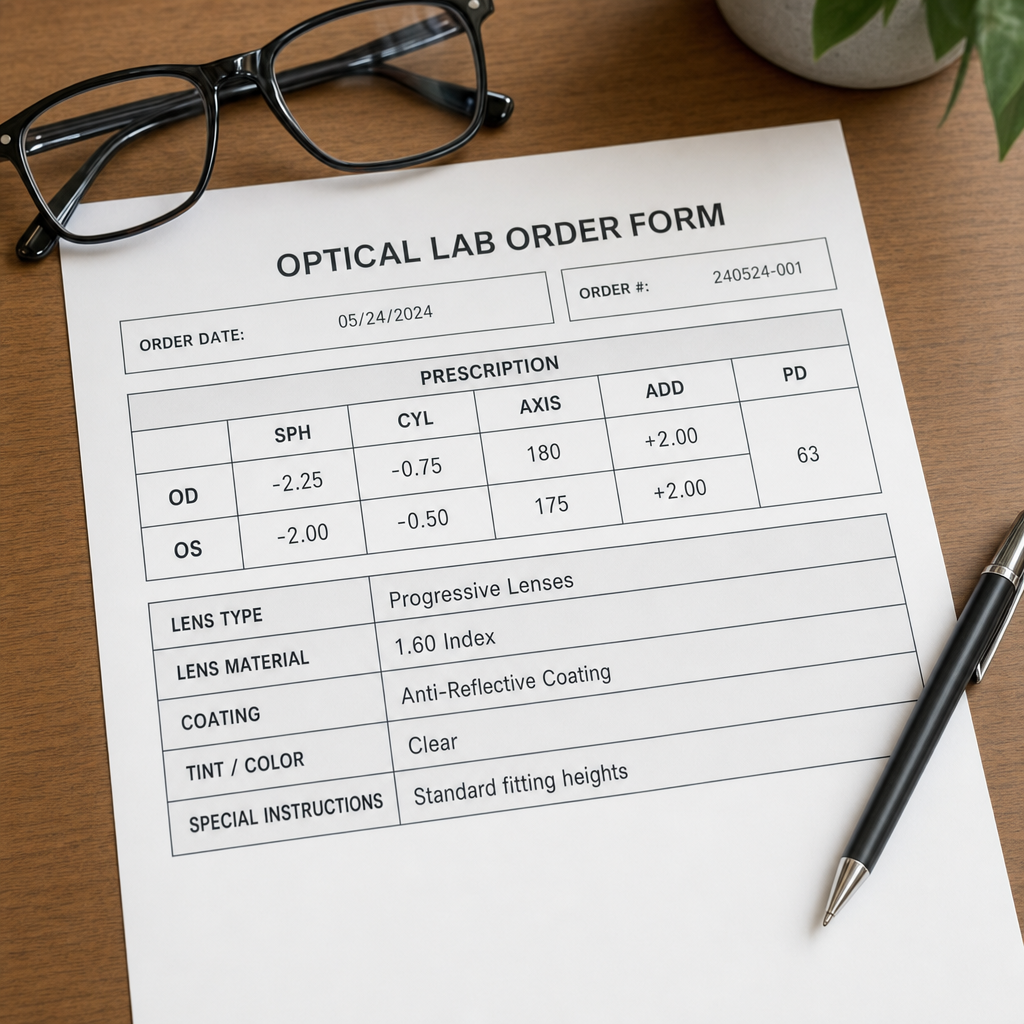
Every optical lab runs on inbound order forms — faxes, emails, PDFs, photos from a phone. Someone has to read each one and key the prescription into your system: SPH, CYL, AXIS, ADD, PD, lens type, coatings. It's slow, it's repetitive, and it's where remakes are born when a digit gets transposed.
AI extraction changes the economics of that step. Instead of a person reading and typing, a vision model reads the form and returns structured fields you can review and approve in seconds.
Where the time actually goes
Most labs underestimate order-entry cost because it's spread across the day in two-minute chunks. At ~10 minutes per order between reading, typing, and double-checking, a lab doing 100 orders a day is spending two full staff-shifts just on data entry.
How AI order entry works
- Drop in the order form — photo, scan, or PDF. No template required.
- The model extracts each field into your schema and assigns a confidence score.
- Anything below your threshold is flagged for a quick human review.
- Approve, and the structured order is ready to export or push downstream.
Keep a human on the low-confidence cases
The goal isn't to remove people — it's to remove typing. High-confidence orders fly through; the few ambiguous ones (a smudged axis, an unusual abbreviation) are surfaced for review so nothing wrong slips into production. That's how you cut entry time without raising your remake rate.
Getting started
Lens Order AI is free to try — process your first orders without a credit card, define the exact fields your lab uses, and see the accuracy on your own forms before you commit.