
Turn Handwritten Prescriptions into Structured Orders with AI
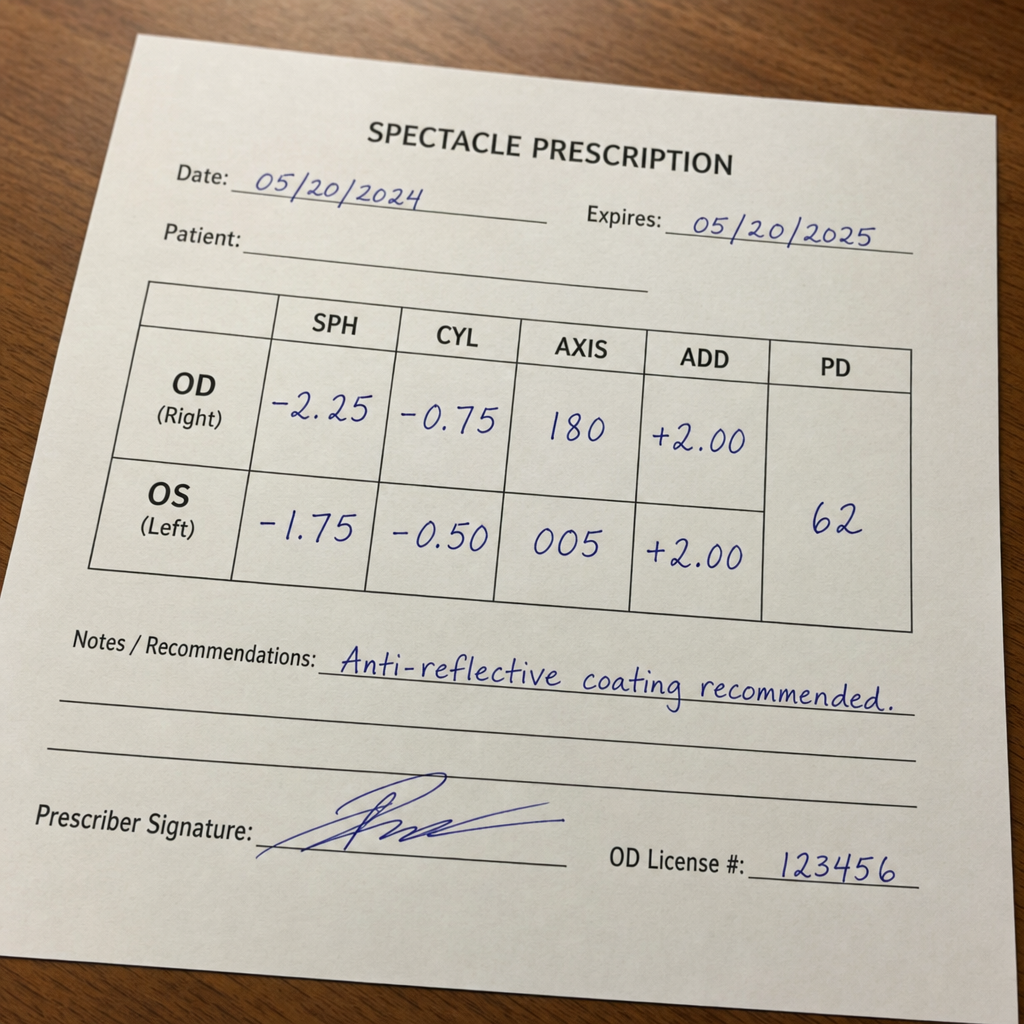
Handwritten prescriptions are the hardest input in optics: cramped boxes, personal shorthand, plus/minus signs that look alike, and notation (SPH, CYL, AXIS, ADD) that a general OCR engine has no understanding of. Plain text recognition gets you characters; it doesn't get you a correct order.
Why generic OCR isn't enough
Optical data has structure and rules. An axis is 0–180. A cylinder has a sign. An add is positive. A model that understands the domain can use those rules to disambiguate messy handwriting — and, just as importantly, to know when it isn't sure.
Confidence is the safety mechanism
The right approach pairs extraction with a confidence score per field. Clean, legible values pass automatically; anything uncertain is flagged for a human to confirm against the original image. You get the speed of automation on the easy 90% and a safety net on the hard 10%.
What you get out
- Each field mapped into your schema, not just raw text.
- A per-field confidence score so you know what to trust.
- Low-confidence fields flagged for review before anything is saved.
- Clean, exportable structured data ready for your lab system.
Try it on your own scripts
The only honest accuracy number is the one you measure on your own forms. Lens Order AI has a free tier — upload a handful of your real prescriptions and judge the output yourself.